


Choline is an essential nutrient that plays a pivotal role in various physiological processes, including liver health, brain function, and lipid metabolism. It is a water-soluble compound that is often grouped with the B-vitamins due to its similar functions. The body can synthesize choline in small amounts, but the majority must be obtained through diet.
Choline bitartrate is a dietary supplement form of choline. It is the salt of choline with tartaric acid: a stable, water-soluble form that is widely used in supplements.
Biochemical Role and Functions of Choline Bitartrate
- Choline Content:
- About 41% of the weight of choline bitartrate is choline itself; the rest is tartaric acid. So 850 mg of choline bitartrate supplies roughly 349 mg of choline.
- Key Functions:
- Phosphatidylcholine Synthesis: Choline from choline bitartrate is a precursor for phosphatidylcholine, a major component of cell membranes, essential for maintaining cell structure and signaling.
- Methylation Reactions: Choline is a precursor to betaine, which acts as a methyl donor in various biochemical processes, including the remethylation of homocysteine to methionine.
- Acetylcholine Synthesis: Choline is crucial for the production of acetylcholine, a neurotransmitter involved in memory, muscle control, and mood regulation.
Importance of Choline Bitartrate for Health
- Liver Health:
- Lipid Metabolism: Choline contributes to normal lipid metabolism. The liver needs it to make phosphatidylcholine for very-low-density lipoproteins (VLDL), the particles that carry fat out of the liver; when choline runs short, fat stays in the liver instead.
- Liver Function: Choline contributes to the maintenance of normal liver function.
- Brain Health:
- Cognitive Function: Choline is needed to make acetylcholine, a neurotransmitter involved in memory and learning.
- Homocysteine Metabolism:
- Homocysteine Recycling: Choline contributes to normal homocysteine metabolism. Its breakdown product betaine donates a methyl group that turns homocysteine back into methionine.
Implications of Choline Bitartrate Deficiency
- Liver Diseases:
- Fatty Liver Disease (MASLD, formerly NAFLD): When adults were fed a diet almost free of choline in a controlled study, 77% of men and 80% of post-menopausal women developed fatty liver or muscle damage, which resolved once choline was returned to the diet. Most fatty liver in everyday life, however, is linked to excess weight and insulin resistance rather than to choline shortage alone.
- Liver Damage: In a large US cohort of people with fatty liver, post-menopausal women whose choline intake fell below the Adequate Intake had more advanced fibrosis. This is an association, not proof of cause.
- Cognitive Decline:
- Dementia Risk: In a Finnish study of about 2,500 middle-aged men followed for more than two decades, those eating the most phosphatidylcholine had a 28% lower risk of dementia than those eating the least. Total choline intake showed no such link, and an observational study cannot prove cause.
- Metabolic Disorders:
- Elevated Homocysteine: Lack of choline can raise blood homocysteine, and high homocysteine is associated with cardiovascular disease.
- Impaired Lipid Metabolism: Deficiency disrupts normal lipid metabolism: without enough choline, the liver cannot package and export fat efficiently.
Dietary Sources of Choline
While choline bitartrate supplements provide a concentrated source of choline, it is also found in various foods, including:
- Animal Products: Eggs, liver, poultry, and fish are rich in choline.
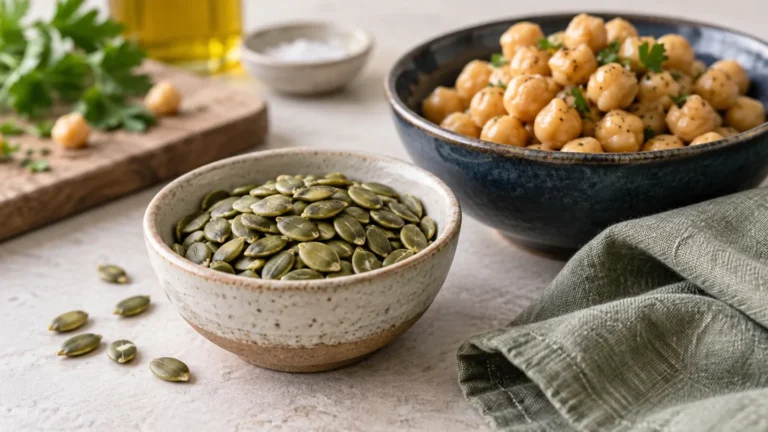
- Plant-Based Sources: Nuts, seeds, soybeans, and cruciferous vegetables like broccoli and Brussels sprouts.
Conclusion
Choline bitartrate is a stable, practical form of choline. Liver, eggs, meat and fish remain the richest food sources, and a supplement can help where the diet falls short. If you’d like to see how we used it, the LiverGuard page lists the full label: 850 mg of choline bitartrate per scoop, next to inositol, methionine and taurine.
How Much Choline Do You Actually Need?
There is no formal Recommended Daily Allowance for choline, because the evidence was judged insufficient to set one. Instead, the US Institute of Medicine set an Adequate Intake: 550 mg per day for adult men and 425 mg for adult women, rising to 450 mg in pregnancy and 550 mg during lactation, when demand is highest. In the EU, EFSA set a single Adequate Intake of 400 mg per day for all adults, 480 mg in pregnancy and 520 mg during lactation. The Tolerable Upper Intake Level for adults is 3,500 mg per day; consistently exceeding it is associated with a fishy body odour, sweating and lowered blood pressure.
In the US, only about 7% of adults reach the Adequate Intake. The richest sources, liver and eggs, are foods many people eat rarely.
Why Requirements Vary So Much Between People
Choline is unusual in that the body can synthesise some of its own, via the PEMT enzyme, which converts phosphatidylethanolamine into phosphatidylcholine. That pathway is oestrogen-dependent, so pre-menopausal women generally produce more endogenous choline than men or post-menopausal women and tolerate a lower intake.
Common genetic variants in PEMT and in the folate gene MTHFD1 raise the requirement, and controlled depletion studies have shown that individuals carrying them develop signs of hepatic steatosis and muscle damage on intakes that leave others unaffected. This is why a single population number is a poor guide to any one person’s requirement.
Choline’s role here is well enough established to be recognised in EU law: authorised claims state that choline contributes to normal lipid metabolism, to the maintenance of normal liver function, and to normal homocysteine metabolism. Those three functions are precisely the pathways described above – VLDL export of triglycerides, membrane phosphatidylcholine, and methyl-group donation.
References
- Zeisel, S. H., & da Costa, K. A. (2009). Choline: an essential nutrient for public health. Nutrition Reviews, 67(11), 615-623. DOI: 10.1111/j.1753-4887.2009.00246.x
- Blusztajn, J. K. (1998). Choline, a vital amine. Science, 281(5378), 794-795. DOI: 10.1126/science.281.5378.794
- Institute of Medicine (US) Panel on Folate, Other B Vitamins, and Choline. (1998). Dietary Reference Intakes for Thiamin, Riboflavin, Niacin, Vitamin B6, Folate, Vitamin B12, Pantothenic Acid, Biotin, and Choline. Washington, DC: National Academies Press. DOI: 10.17226/6015
- Buchman, A. L., Dubin, M. D., Moukarzel, A. A., et al. (1995). Choline deficiency: a cause of hepatic steatosis during parenteral nutrition that can be reversed with intravenous choline supplementation. Hepatology, 22(5), 1399-1403. DOI: 10.1016/0270-9139(95)90143-4
- Wurtman, R. J., Cansev, M., Sakamoto, T., & Ulus, I. H. (2009). Use of phosphatide precursors to promote synaptogenesis. Annual Review of Nutrition, 29, 59-87. DOI: 10.1146/annurev-nutr-080508-141059
- Blusztajn, J. K., & Mellott, T. J. (2012). Choline nutrition programs brain development via DNA and histone methylation. Central Nervous System Agents in Medicinal Chemistry, 12(2), 82-94. DOI: 10.2174/187152412800792706
- Kullenberg, D., Taylor, L. A., Schneider, M., & Massing, U. (2012). Health effects of dietary phospholipids. Lipids in Health and Disease, 11, 3. DOI: 10.1186/1476-511X-11-3
- EFSA Panel on Dietetic Products, Nutrition and Allergies (2016). Dietary Reference Values for choline. EFSA Journal, 14(8), 4484. DOI: 10.2903/j.efsa.2016.4484
- Wallace, T. C., & Fulgoni, V. L. (2016). Assessment of Total Choline Intakes in the United States. Journal of the American College of Nutrition, 35(2), 108-112. DOI: 10.1080/07315724.2015.1080127
- Fischer, L. M., da Costa, K. A., Kwock, L., et al. (2007). Sex and menopausal status influence human dietary requirements for the nutrient choline. The American Journal of Clinical Nutrition, 85(5), 1275-1285. DOI: 10.1093/ajcn/85.5.1275
- Kohlmeier, M., da Costa, K. A., Fischer, L. M., & Zeisel, S. H. (2005). Genetic variation of folate-mediated one-carbon transfer pathway predicts susceptibility to choline deficiency in humans. Proceedings of the National Academy of Sciences, 102(44), 16025-16030. DOI: 10.1073/pnas.0504285102
- da Costa, K. A., Kozyreva, O. G., Song, J., et al. (2006). Common genetic polymorphisms affect the human requirement for the nutrient choline. The FASEB Journal, 20(9), 1336-1344. DOI: 10.1096/fj.06-5734com
- Guerrerio, A. L., Colvin, R. M., Schwartz, A. K., et al. (2012). Choline intake in a large cohort of patients with nonalcoholic fatty liver disease. The American Journal of Clinical Nutrition, 95(4), 892-900. DOI: 10.3945/ajcn.111.020156
- Ylilauri, M. P. T., Voutilainen, S., Lönnroos, E., et al. (2019). Associations of dietary choline intake with risk of incident dementia and with cognitive performance: the Kuopio Ischaemic Heart Disease Risk Factor Study. The American Journal of Clinical Nutrition, 110(6), 1416-1423. DOI: 10.1093/ajcn/nqz148
- European Association for the Study of the Liver, European Association for the Study of Diabetes, European Association for the Study of Obesity (2024). EASL–EASD–EASO Clinical Practice Guidelines on the management of metabolic dysfunction-associated steatotic liver disease (MASLD). Journal of Hepatology, 81(3), 492-542. DOI: 10.1016/j.jhep.2024.04.031