

Overview: Taurine is a conditionally essential amino acid that plays a critical role in various physiological processes. Unlike most amino acids, taurine is not used to build proteins but is essential for numerous cellular functions. It is abundant in the heart, brain, retina, and skeletal muscle, and has significant implications for liver health, cardiovascular function, and neurological development. Taurine is naturally found in various foods and is also available as a dietary supplement.
Biochemical Role and Functions of Taurine
- Cellular Osmoregulation and Membrane Stabilization:
- Taurine helps maintain cell volume and membrane stability, ensuring proper cell function and protection against stress-induced damage.
- Bile Salt Formation:
- Taurine conjugates with bile acids to form bile salts, which are essential for the digestion and absorption of fats and fat-soluble vitamins in the small intestine.
- Antioxidant Defense:
- Taurine is not a strong direct scavenger of most reactive oxygen species (ROS). It neutralises hypochlorous acid made by white blood cells, forming taurine chloramine, and it helps mitochondria produce fewer ROS in the first place.
- Calcium Homeostasis:
- Taurine plays a role in regulating intracellular calcium levels, which is crucial for various cellular functions, including muscle contraction and neurotransmitter release.
Importance of Taurine for Health
- Liver Health:
- Bile Acids: In the liver, taurine is attached to bile acids. Turning cholesterol into bile acids is the main way the body gets rid of cholesterol.
- Antioxidant Protection: In animal studies, taurine protects liver cells against oxidative damage in models of metabolic dysfunction-associated steatotic liver disease (MASLD, formerly NAFLD) and other liver injury.
- Fat Metabolism: In animal models of fatty liver, taurine lowers the amount of fat stored in the liver; human data are limited to small studies.
- Cardiovascular Health:
- Heart Function: Taurine is abundant in heart muscle, where it helps regulate the calcium handling that normal contraction depends on.
- Blood Pressure Regulation: In a meta-analysis of human trials, 1 to 6 g of taurine a day lowered resting blood pressure by about 3 mmHg on average.
- Blood Lipids: A 2024 meta-analysis of randomised trials found that taurine lowered triglycerides, while HDL cholesterol did not change.
- Neurological Health:
- Neurotransmitter Regulation: Taurine acts as a neuromodulator and neurotransmitter in the brain, influencing the release and action of other neurotransmitters such as GABA, glycine, and glutamate.
- Muscle Function and Development:
- Muscle Contraction: Taurine is concentrated in skeletal muscle, where it helps regulate the calcium levels that muscle contraction depends on.
- Exercise Performance: A meta-analysis of small trials found a modest improvement in endurance performance after taurine supplementation.
Implications of Taurine Deficiency
- Liver Diseases:
- Fatty Liver Disease: Mice that cannot move taurine into their cells develop chronic liver inflammation and fibrosis. In people, when taurine runs short the liver uses more glycine to form bile salts instead, and a clear deficiency is rare outside premature infants and long-term intravenous feeding.
- Cardiovascular Disorders:
- Hypertension: In the WHO CARDIAC study across many populations, higher taurine excretion, a marker of seafood intake, went with lower blood pressure. This is an association, not proof of cause.
- Cardiomyopathy: Cats cannot make enough taurine, and on a taurine-poor diet they develop a reversible cardiomyopathy. This has not been shown in people eating a normal diet.
Dietary Sources of Taurine
Taurine is found in various animal-based foods, making it accessible through a balanced diet. Key sources include:
- Meat: Beef, lamb, and pork.
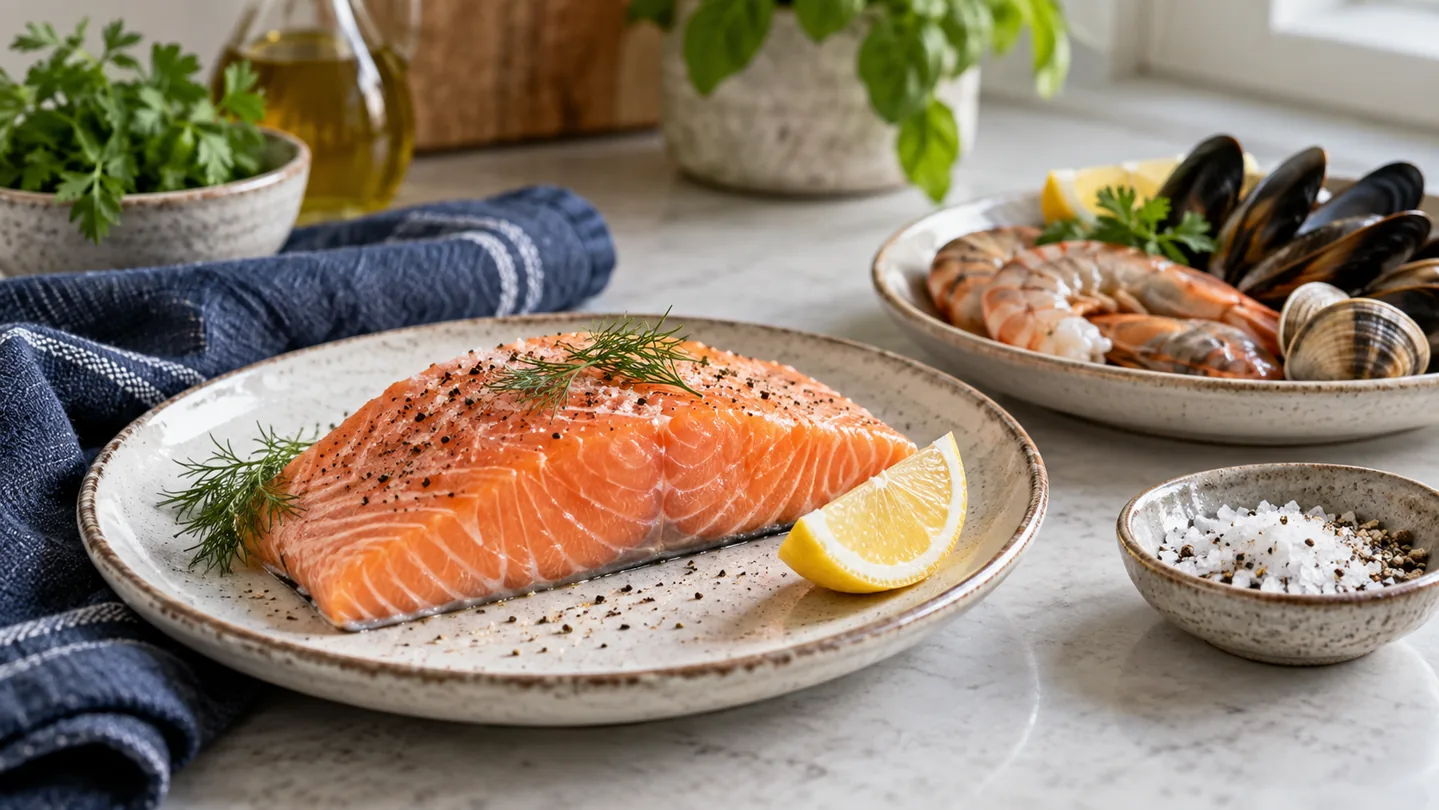
- Seafood: Fish, shellfish, and other seafood.
- Dairy Products: Milk, cheese and yogurt, in much smaller amounts than meat and seafood.
- Poultry: Chicken and turkey.
Interesting fact: One dose of LiverGuard provides 850 mg of taurine. From lean beef, at about 50 mg per 100 g raw, that is roughly 1.7 kg raw or about 2.4 kg once pan-cooked, because taurine leaches into the cooking juices, and boiling loses even more. Mussels are the efficient route at around 130 g raw, or about 190 g cooked. Plant foods contain essentially none.
Conclusion
Taurine is made in small amounts by the body and comes mainly from meat, fish and seafood; plant foods contain none. Human trials point to modest effects on blood pressure and triglycerides, while most liver findings so far come from animal studies. If you’re curious where taurine sits in our own formula, the LiverGuard page shows the label: 850 mg per scoop, next to choline and methionine.
References
- Hayes, K. C., & Sturman, J. A. (1981). Taurine in metabolism. Annual Review of Nutrition, 1, 401-425. DOI: 10.1146/annurev.nu.01.070181.002153
- Marcinkiewicz, J., & Kontny, E. (2014). Taurine and inflammatory diseases. Amino Acids, 46(1), 7-20. DOI: 10.1007/s00726-012-1361-4
- Ripps, H., & Shen, W. (2012). Review: taurine: a “very essential” amino acid. Molecular Vision, 18, 2673-2686. PMID: 23170060
- Huxtable, R. J. (1992). Physiological actions of taurine. Physiological Reviews, 72(1), 101-163. DOI: 10.1152/physrev.1992.72.1.101
- Stapleton, P. P., Charles, R. P., Redmond, H. P., & Bouchier-Hayes, D. J. (1997). Taurine and human nutrition. Clinical Nutrition, 16(3), 103-108. DOI: 10.1016/S0261-5614(97)80234-8
- Schaffer, S. W., Jong, C. J., Ito, T., & Azuma, J. (2014). Effect of taurine on ischemia-reperfusion injury. Amino Acids, 46(1), 21-30. DOI: 10.1007/s00726-012-1378-8
- Chesney, R. W. (1985). Taurine: its biological role and clinical implications. Advances in Pediatrics, 32, 1-42. DOI: 10.1016/S0065-3101(24)00213-5
- Ghandforoush-Sattari, M., Mashayekhi, S., Krishna, C. V., Thompson, J. P., & Routledge, P. A. (2010). Pharmacokinetics of oral taurine in healthy volunteers. Journal of Amino Acids, 2010, 346237. DOI: 10.4061/2010/346237
- Miyazaki, T., & Matsuzaki, Y. (2014). Taurine and liver diseases: a focus on the heterogeneous protective properties of taurine. Amino Acids, 46(1), 101-110. DOI: 10.1007/s00726-012-1381-0
- Jong, C. J., Azuma, J., & Schaffer, S. (2012). Mechanism underlying the antioxidant activity of taurine: prevention of mitochondrial oxidant production. Amino Acids, 42(6), 2223-2232. DOI: 10.1007/s00726-011-0962-7
- Waldron, M., Patterson, S. D., Tallent, J., & Jeffries, O. (2018). The Effects of Oral Taurine on Resting Blood Pressure in Humans: a Meta-Analysis. Current Hypertension Reports, 20(9), 81. DOI: 10.1007/s11906-018-0881-z
- Waldron, M., Patterson, S. D., Tallent, J., & Jeffries, O. (2018). The Effects of an Oral Taurine Dose and Supplementation Period on Endurance Exercise Performance in Humans: A Meta-Analysis. Sports Medicine, 48(5), 1247-1253. DOI: 10.1007/s40279-018-0896-2
- Tzang, C. C., Chi, L. Y., Lin, L. H., et al. (2024). Taurine reduces the risk for metabolic syndrome: a systematic review and meta-analysis of randomized controlled trials. Nutrition & Diabetes, 14, 29. DOI: 10.1038/s41387-024-00289-z
- Warskulat, U., Borsch, E., Reinehr, R., et al. (2006). Chronic liver disease is triggered by taurine transporter knockout in the mouse. The FASEB Journal, 20(3), 574-576. DOI: 10.1096/fj.05-5016fje
- Yamori, Y., Taguchi, T., Hamada, A., et al. (2010). Taurine in health and diseases: consistent evidence from experimental and epidemiological studies. Journal of Biomedical Science, 17(Suppl 1), S6. DOI: 10.1186/1423-0127-17-S1-S6
- Pion, P. D., Kittleson, M. D., Rogers, Q. R., & Morris, J. G. (1987). Myocardial failure in cats associated with low plasma taurine: a reversible cardiomyopathy. Science, 237(4816), 764-768. DOI: 10.1126/science.3616607
- Laidlaw, S. A., Grosvenor, M., & Kopple, J. D. (1990). The taurine content of common foodstuffs. Journal of Parenteral and Enteral Nutrition, 14(2), 183-188. DOI: 10.1177/0148607190014002183
- Spitze, A. R., Wong, D. L., Rogers, Q. R., & Fascetti, A. J. (2003). Taurine concentrations in animal feed ingredients; cooking influences taurine content. Journal of Animal Physiology and Animal Nutrition, 87(7-8), 251-262. DOI: 10.1046/j.1439-0396.2003.00434.x