

Overview: Zinc is an essential trace mineral that the body cannot store in any meaningful reserve, which means a steady dietary supply is required. It is a structural and catalytic component of hundreds of enzymes and transcription factors, and the liver sits at the centre of its metabolism — regulating how zinc is absorbed, bound, distributed and excreted. Because of this, liver disease and zinc status are tightly linked: impaired liver function depletes zinc, and low zinc in turn worsens several of the processes that damage the liver.
Biochemical Role and Functions of Zinc
- Enzyme Catalysis:
- Zinc is a required cofactor for a very large number of human enzymes. Among them is alcohol dehydrogenase, the enzyme that performs the first step of alcohol breakdown in the liver — which is one reason zinc status and alcohol metabolism are connected.
- Structural Role in Proteins:
- Zinc holds the shape of “zinc finger” domains found in transcription factors — the proteins that switch genes on and off. Without zinc these proteins lose their fold and their function, which is why deficiency affects so many systems at once.
- Antioxidant Defense:
- Zinc contributes to antioxidant protection both directly, as part of copper-zinc superoxide dismutase, and indirectly, by inducing metallothionein — a small protein that binds metals and scavenges free radicals. This is the mechanism most relevant to a liver under oxidative stress.
- Gut Barrier Integrity:
- Zinc helps maintain the tight junctions of the intestinal lining. When that barrier leaks, bacterial endotoxin reaches the liver through the portal vein and drives inflammation — a pathway demonstrated in experimental models of alcohol-induced liver injury.
- Immune Function and Cell Renewal:
- Zinc is required for the development and normal function of immune cells and for DNA synthesis and cell division — which is why tissues that renew quickly, including the gut lining and the skin, are the first to show a shortfall.
Importance of Zinc for Health
- Liver Health:
- The liver governs zinc homeostasis, and chronic liver conditions — hepatitis, fatty liver, cirrhosis — consistently disturb it. Reviews of chronic liver disease describe low zinc status as a common finding rather than an occasional one, and link it to disordered nitrogen handling and to insulin resistance.
- Oxidative Stress and Fibrosis:
- Persistent oxidative stress is one of the drivers that pushes a fatty liver towards fibrosis — the scarring that replaces working liver tissue. Zinc’s role in antioxidant defence is the basis for the interest in it as a supportive nutrient in this setting.
- Glucose and Lipid Metabolism:
- Zinc participates in insulin storage and signalling. In two small placebo-controlled trials in overweight people with non-alcoholic fatty liver disease who were also on a calorie-restricted diet, 30 mg of zinc a day lowered some liver enzymes, and in one of them total and LDL cholesterol; liver fat itself did not change significantly where it was measured. That dose is above the 25 mg a day set as the tolerable upper intake level in the EU, so these were short, supervised studies, not a model for self-dosing.
- Immunity:
- Zinc contributes to the normal function of the immune system — one of the earliest and best-documented consequences of human zinc deficiency.
- Skin, Taste and Wound Repair:
- Slow wound healing, skin complaints and a blunted sense of taste or smell are classical signs that zinc supply is inadequate.
Implications of Zinc Deficiency
- Why It Happens in Liver Disease:
- Three mechanisms overlap: lower dietary intake, increased use and sequestration by the liver itself, and greater urinary loss. Because most circulating zinc travels bound to albumin, the low albumin of advanced liver disease compounds the picture.
- Metabolic Consequences:
- Zinc shortfall has been associated with insulin resistance and with hepatic steatosis — the accumulation of fat inside liver cells — creating a loop in which liver dysfunction and zinc depletion reinforce each other.
- Nitrogen Handling:
- Zinc-dependent enzymes take part in the urea cycle, the route by which the body disposes of ammonia. As liver disease advances, this is one of the pathways most affected.
- Everyday Signs:
- Reduced appetite, altered taste, frequent infections, hair thinning, skin problems and slow healing are the practical markers most people would notice before any blood test is ordered.
Dietary Sources of Zinc
- Shellfish and Seafood: oysters are the densest natural source by a wide margin; crab and shrimp also contribute.
- Red Meat and Poultry: beef and lamb are the most reliable everyday sources in a typical diet, with poultry providing less.
- Dairy and Eggs: cheese, milk and eggs supply moderate amounts in a well-absorbed form.
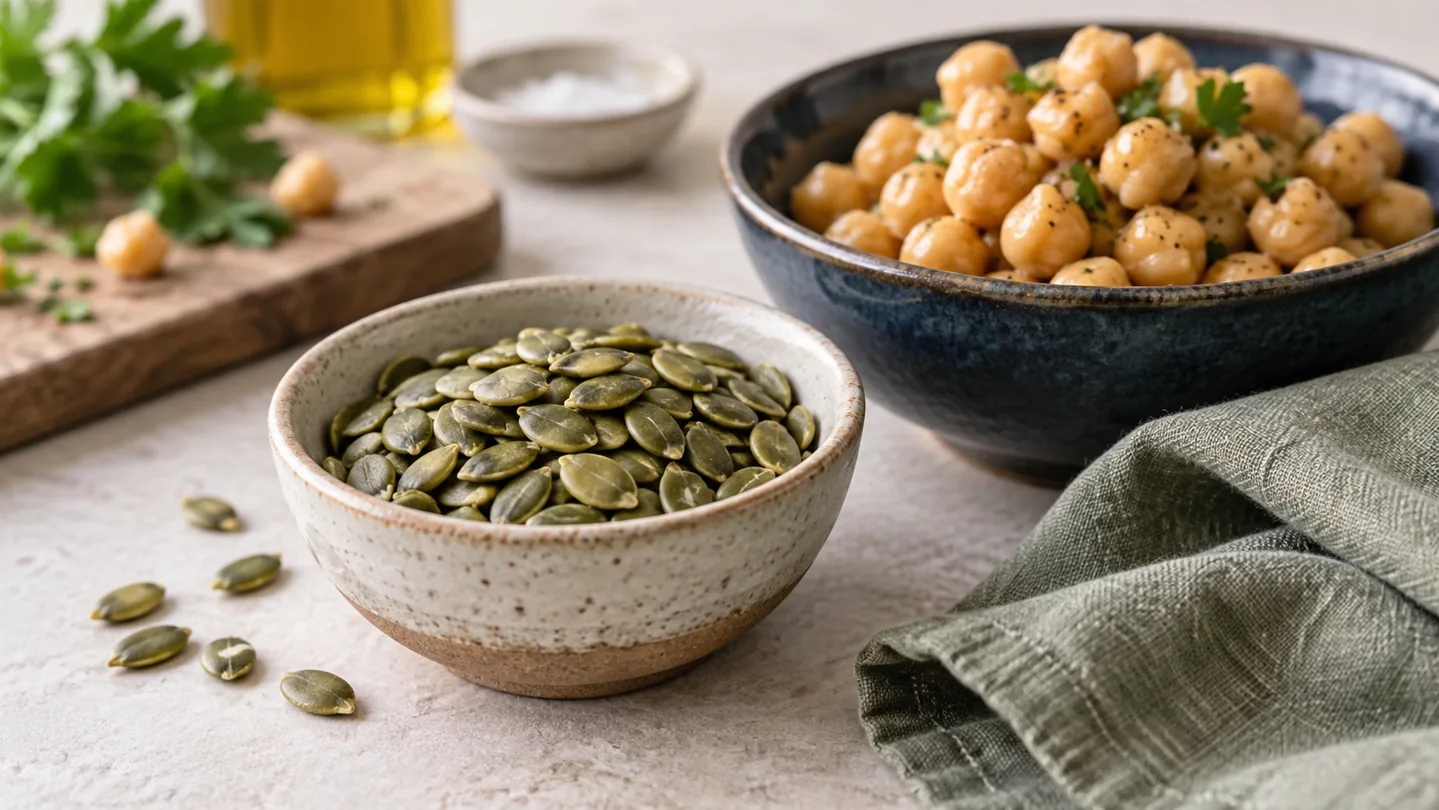
- Legumes, Nuts, Seeds and Whole Grains: pumpkin seeds, chickpeas, lentils and cashews all contain zinc, but they also contain phytate, which binds zinc and reduces how much is absorbed. This is why plant-based diets can look adequate on paper and still fall short in practice.
Conclusion
Zinc is not a headline nutrient in the way that some are, but it is difficult to name a system that works properly without it — and the liver is where its metabolism is governed. Its two most relevant contributions in this context are antioxidant defence and the maintenance of the gut barrier, both of which sit upstream of the processes that turn a fatty liver into a scarred one. LiverGuard contains 7.5 mg of zinc (as gluconate) per dose, alongside choline, inositol, methionine and taurine. If you are curious where zinc sits in that formula, the LiverGuard page shows the full label with the amount of each ingredient.
References
- Prasad, A. S. (2013). Discovery of human zinc deficiency: its impact on human health and disease. Advances in Nutrition, 4(2), 176-190. DOI: 10.3945/an.112.003210
- Maret, W. (2013). Zinc and the zinc proteome. Metal Ions in Life Sciences, 12, 479-501. DOI: 10.1007/978-94-007-5561-1_14
- Himoto, T., & Masaki, T. (2018). Associations between zinc deficiency and metabolic abnormalities in patients with chronic liver disease. Nutrients, 10(1), 88. DOI: 10.3390/nu10010088
- Himoto, T., & Masaki, T. (2020). Current trends of essential trace elements in patients with chronic liver diseases. Nutrients, 12(7), 2084. DOI: 10.3390/nu12072084
- Ullah, M. I., Alameen, A. A. M., & Al-Oanzi, Z. H. (2023). Biological role of zinc in liver cirrhosis: an updated review. Biomedicines, 11(4), 1094. DOI: 10.3390/biomedicines11041094
- Fathi, M., Alavinejad, P., & Haidari, Z. (2020). The effect of zinc supplementation on steatosis severity and liver function enzymes in overweight/obese patients with mild to moderate non-alcoholic fatty liver following calorie-restricted diet. Biological Trace Element Research, 197(2), 394-404. DOI: 10.1007/s12011-019-02015-8
- Rezaei, S. M. A., Mohammadi, F., & Eftekhari, M. H. (2023). The effects of zinc supplementation on the metabolic factors in patients with non-alcoholic fatty liver disease: a randomized, double-blinded, placebo-controlled clinical trial. BMC Nutrition, 9(1), 138. DOI: 10.1186/s40795-023-00776-z
- Diglio, D. C., Fernandes, S. A., & Stein, J. (2020). Role of zinc supplementation in the management of chronic liver diseases: a systematic review and meta-analysis. Annals of Hepatology, 19(2), 190-196. DOI: 10.1016/j.aohep.2019.08.011
- Bañares, J., Aceituno, L., & Ruiz-Ortega, L. (2024). Zinc supplementation to improve prognosis in patients with compensated advanced chronic liver disease: a multicenter, randomized, double-blind, placebo-controlled clinical trial. Hepatology Communications, 8(11), e0524 (study protocol; no results yet). DOI: 10.1097/HC9.0000000000000524
- Zhong, W., Li, Q., & Sun, Q. (2015). Preventing gut leakiness and endotoxemia contributes to the protective effect of zinc on alcohol-induced steatohepatitis in rats. The Journal of Nutrition, 145(12), 2690-2698. DOI: 10.3945/jn.115.216093
- Tokarczyk, J., & Koch, W. (2025). Dietary Zn — recent advances in studies on its bioaccessibility and bioavailability. Molecules, 30(13), 2742. DOI: 10.3390/molecules30132742
- EFSA Panel on Dietetic Products, Nutrition and Allergies (NDA). (2014). Scientific opinion on dietary reference values for zinc. EFSA Journal, 12(10), 3844. DOI: 10.2903/j.efsa.2014.3844