

Rash Skin- The Link Between Liver Malfunction and Skin Health
Liver health and skin are linked, but less often than popular advice suggests. Changes in skin colour (yellowing, bronze skin, etc.) are associated with serious diseases, and advanced liver disease leaves several specific marks on the skin. Everyday rashes and pimples, by contrast, usually have dermatological or allergic causes. The idea that a struggling liver lets ‘toxins’ build up and show on the skin is widespread, but studies have not shown it. Here are the commonly claimed links, with what the evidence says:
Pimples and Acne– Acne comes from hormones, excess sebum, skin bacteria and inflammation in the hair follicle; there is no evidence that liver ‘toxins’ cause it.
Rashes– Most rashes are allergic, irritant or infectious. The liver-related exception is itching from impaired bile flow, which usually comes without a visible rash.
Dull and Unhealthy Skin– Advanced liver disease often leads to malnutrition, which can show on the skin; in early fatty liver this is not expected.
Choline, inositol, methionine and taurine all take part in liver metabolism. Of the four, only a lack of choline has been clearly shown in people to affect the liver (it causes fat build-up); a direct effect of any of them on the skin has not been shown:
Choline:
- Function: Contributes to normal lipid metabolism and to the maintenance of normal liver function; needed to export fat from the liver.
- Impact on Skin: A deficiency leads to fat accumulation in the liver, which reversed when choline was restored in patients on intravenous feeding; no study links it to acne or other skin problems.
Inositol:
- Function: Important for cell membrane integrity and lipid metabolism.
- Impact on Skin: The body makes its own inositol, so dietary deficiency is uncommon. In animals a lack of inositol leads to fat build-up in the liver; effects on human skin have not been studied.
Methionine:
- Function: Needed to make SAMe, the body’s main methyl donor, and, further along the same pathway, cysteine for glutathione.
- Impact on Skin: Methionine is an essential amino acid supplied by protein foods; deficiency is rare in people who eat enough protein, and no link to skin irritation has been shown.
Taurine:
- Function: Used to form bile salts, and shows antioxidant properties in laboratory studies.
- Impact on Skin: The body makes taurine and also gets it from meat and fish, so deficiency in healthy adults is rare; no study links low taurine to rashes.
Health Implications of Poor Skin and Liver Health
The connection between liver health and skin condition highlights the broader implications for overall health:
- Systemic Inflammation: Chronic skin issues can be a sign of systemic inflammation and oxidative stress.
- Metabolic Disorders: Poor liver function is often associated with metabolic disorders such as insulin resistance and obesity.
- Nutritional Imbalance: Skin problems can indicate underlying nutritional deficiencies that affect overall health.
Prevention and Management
To maintain both liver and skin health, it is essential to address nutritional deficiencies and support liver function:
- Balanced Diet: Ensure adequate intake of choline, inositol, methionine, and taurine through a balanced diet.
- Hydration: Drink enough for your needs; extra water has not been shown to ‘detox’ the liver or clear the skin.
- Regular Exercise: Promote liver health and improve overall metabolism.
- Limit Alcohol and Toxins: Reduce exposure to substances that can impair liver function.
Conclusion
Skin and liver are clearly linked in advanced liver disease; in everyday skin complaints the liver is rarely the cause. Of the nutrients above, choline matters most for the liver itself: it contributes to normal lipid metabolism and to the maintenance of normal liver function. If you would rather judge a supplement by its label than by promises about skin, the LiverGuard page lists every ingredient with its dose.
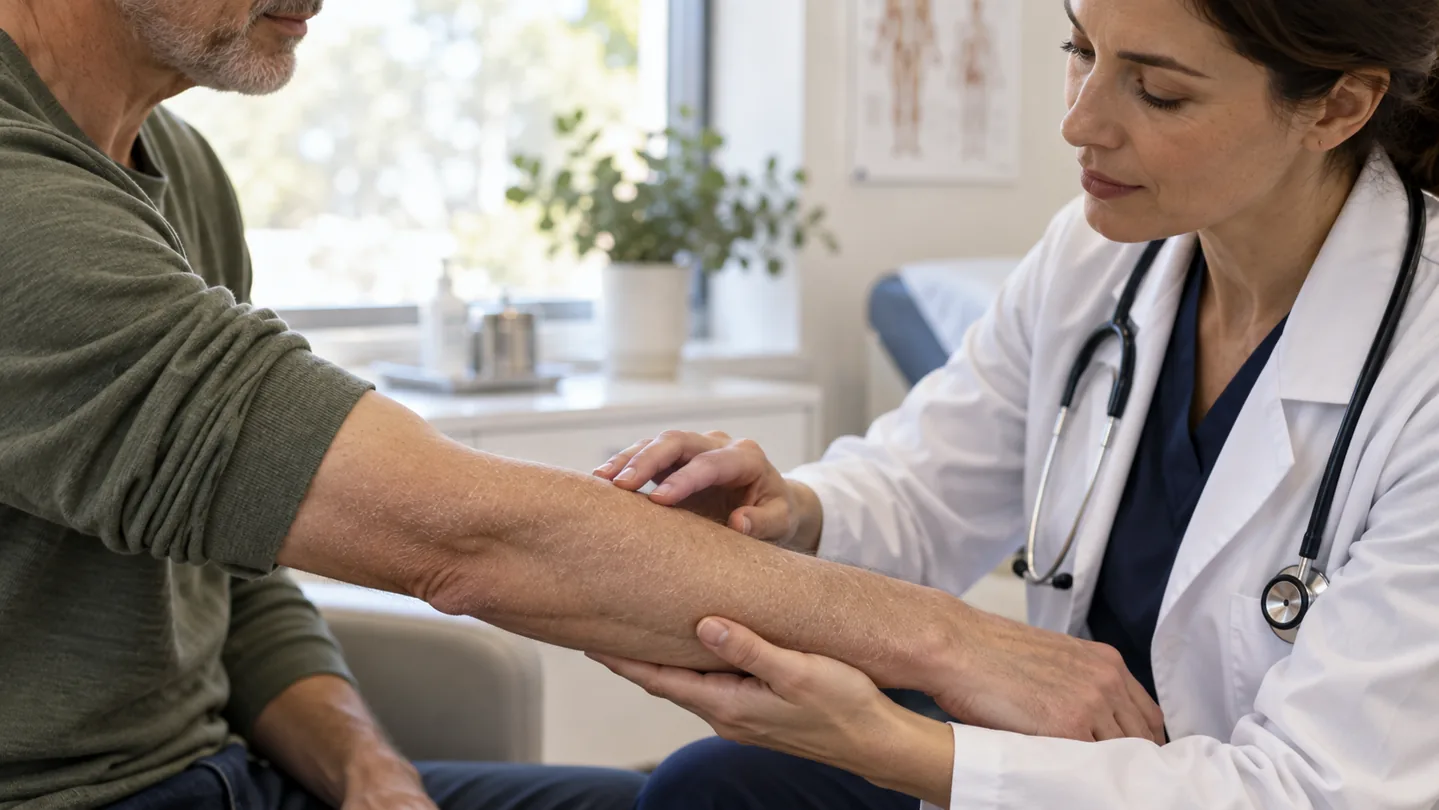
Which Skin Signs Point to the Liver, and Which Do Not
This distinction is worth making carefully, because most skin complaints have nothing to do with the liver. Acne, eczema, contact dermatitis and the majority of ordinary rashes have dermatological or allergic causes, and attributing them to the liver is a common and unhelpful error.
The skin findings that genuinely do reflect liver function are more specific, and most of them indicate advanced disease rather than early change:
Cholestatic pruritus – generalised itching without a visible rash, often worse at night and on the palms and soles. It occurs when bile flow is impaired and bile salts accumulate, and it is one of the more genuinely liver-specific skin symptoms. Jaundice – yellowing of the skin and the whites of the eyes, appearing once bilirubin rises well above the normal range, typically visible first in the sclera. Spider naevi and palmar erythema – small radiating vessels on the upper trunk and reddened palms, both associated with the altered oestrogen handling of chronic liver disease. Easy bruising also belongs here, reflecting reduced synthesis of clotting factors.
The honest position is this: in the early, fatty stage that most people are actually dealing with, the liver usually produces no skin signs at all. Steatosis is typically asymptomatic and found incidentally on ultrasound. If itching, jaundice or easy bruising are present, that warrants medical assessment rather than a supplement – these are signals to have liver function investigated properly.
References
- Zeisel, S. H., & da Costa, K. A. (2009). Choline: an essential nutrient for public health. Nutrition Reviews, 67(11), 615-623. DOI: 10.1111/j.1753-4887.2009.00246.x
- Buchman, A. L., & Dubin, M. D. (1995). Choline deficiency: a cause of hepatic steatosis during parenteral nutrition that can be reversed with intravenous choline supplementation. Hepatology, 22(5), 1399-1403. DOI: 10.1016/0270-9139(95)90143-4
- Pani, A., Giossi, R., Menichelli, D., et al. (2020). Inositol and Non-Alcoholic Fatty Liver Disease: A Systematic Review on Deficiencies and Supplementation. Nutrients, 12(11), 3379. DOI: 10.3390/nu12113379
- Croze, M. L., & Soulage, C. O. (2013). Potential role and therapeutic interests of myo-inositol in metabolic diseases. Biochimie, 95(10), 1811-1827. DOI: 10.1016/j.biochi.2013.05.011
- Finkelstein, J. D. (1990). Methionine metabolism in mammals. The Journal of Nutritional Biochemistry, 1(5), 228-237. DOI: 10.1016/0955-2863(90)90070-2
- Zeisel, S. H. (2006). Choline: critical role during fetal development and dietary requirements in adults. Annual Review of Nutrition, 26, 229-250. DOI: 10.1146/annurev.nutr.26.061505.111156
- Hayes, K. C., & Sturman, J. A. (1981). Taurine in metabolism. Annual Review of Nutrition, 1, 401-425. DOI: 10.1146/annurev.nu.01.070181.002153
- Marcinkiewicz, J., & Kontny, E. (2014). Taurine and inflammatory diseases. Amino Acids, 46(1), 7-20. DOI: 10.1007/s00726-012-1361-4
- Targher, G., Corey, K. E., Byrne, C. D., & Roden, M. (2021). The complex link between NAFLD and type 2 diabetes mellitus — mechanisms and treatments. Nature Reviews Gastroenterology & Hepatology, 18(9), 599-612. DOI: 10.1038/s41575-021-00448-y
- Pickett-Blakely, O., Young, K., & Carr, R. M. (2018). Micronutrients in Nonalcoholic Fatty Liver Disease Pathogenesis. Cellular and Molecular Gastroenterology and Hepatology, 6(4), 451-462. DOI: 10.1016/j.jcmgh.2018.07.004
- World Health Organization. (2020). WHO Guidelines on Physical Activity and Sedentary Behaviour. Geneva: World Health Organization.
- Day, C. P. (2006). From fat to inflammation. Gastroenterology, 130(1), 207-210. DOI: 10.1053/j.gastro.2005.11.017
- Hazin, R., Abu-Rajab Tamimi, T. I., Abuzetun, J. Y., & Zein, N. N. (2009). Recognizing and treating cutaneous signs of liver disease. Cleveland Clinic Journal of Medicine, 76(10), 599-606. DOI: 10.3949/ccjm.76a.08113